

Nearly a year into a five-year study of Sanskrit scholarship in the Kaveri delta, researchers led by Selwyn Bye-Fellow Dr Jonathan Duquette have made their first major find. It is a manuscript that may be the earliest known work of Nāmasiddhānta in South India, a religious movement holding that reciting the name of a god is enough to achieve spiritual liberation.
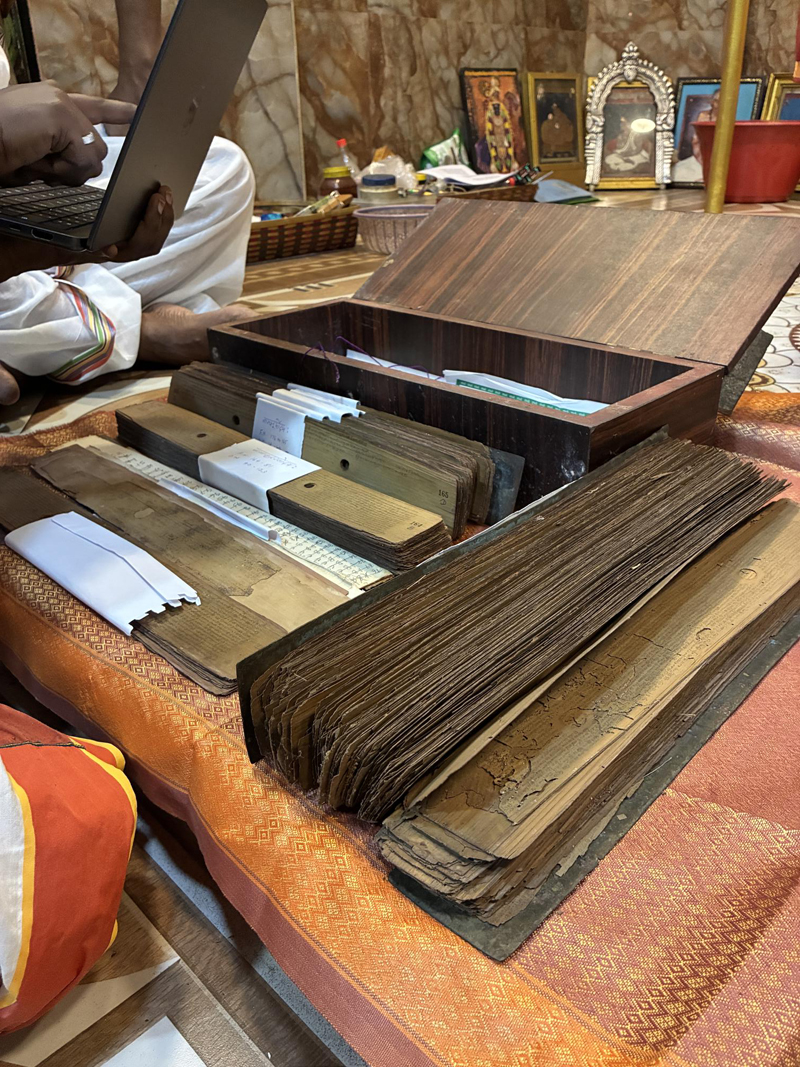
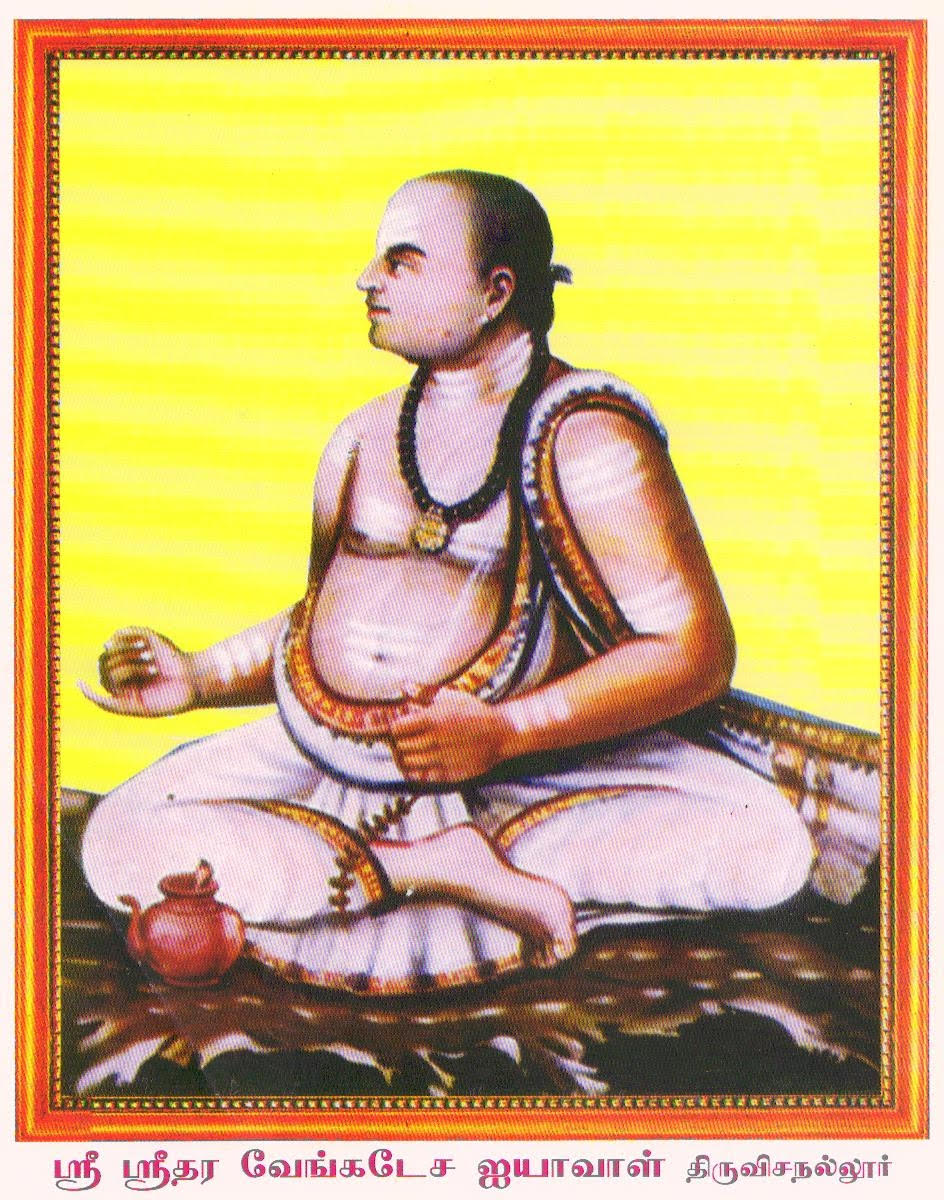
The palm-leaf manuscript, with an engraved metal cover, is the only known manuscript of the Bhagavannāmabhūṣaṇa, a foundational work of Nāmasiddhānta authored by the celebrated saint-scholar Śrīdhara Veṅkaṭeśa (c. 1635-1720). It was found in a wooden box in a small monastery in Marudanallur, in the Kaveri delta. The manuscript itself has been worshipped daily for generations, along with other worship artefacts that belonged to Sadguru Swami (c. 1777-1817), the founding figure of the influential bhajana tradition still living today. This musical-performative tradition has close links with the Nāmasiddhānta movement. Dr Duquette and his team wanted to track down this important work after reading a 2019 transcript that was in poor condition. Local contacts led them to the monastery, where the pontiff—a seventh-generation descendant of Sadguru Swami—showed them the box. Despite the heat and insects that often damage manuscripts in India, the manuscript has been well preserved and can be read fairly easily. It is written in Grantha, the script used for writing Sanskrit in South India.
A scribal note on the last folio records the date via an astrological verse. According to the team, the manuscript is likely to have been copied in 1801, which would place it within Sadguru Swami’s lifetime.
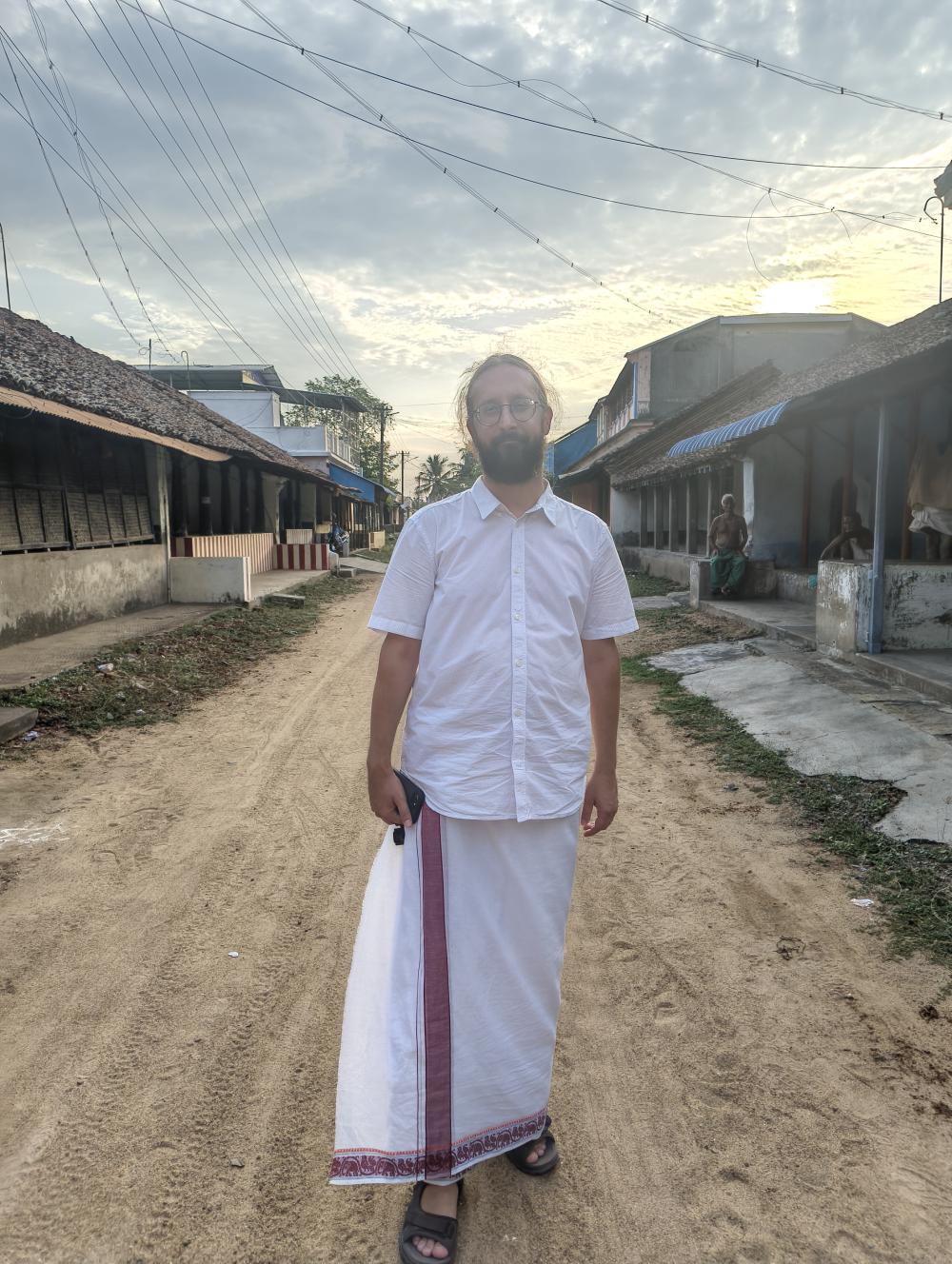
"Our focus as scholars has always been on Sanskrit as the language of the court, the language of an elite," Dr Duquette said. "But most of the production of works in that period was in rural villages, far from the colonial centres. That scholarship just continued to be produced, and we had ignored it."
The Kaveri project, funded by the Arts and Humanities Research Council, was first featured by the University of Cambridge and Selwyn College in October 2025. It is exploring how pundits kept Sanskrit scholarship alive through the colonial period with innovative works in philosophy, theology, poetry, and drama.
Dr Duquette and his team are now working through photographs of manuscripts and rare printed editions acquired during fieldwork and will soon produce an article exploring their significance.
Further fieldwork is planned across the Kaveri Delta, where dozens of similar villages and monasteries remain to be surveyed. For more information, see the team’s website, which includes an interactive map: https://www.kaveri-project.org/.
|
|